Crocodile Mummies: Sacred Monsters of Ancient Egypt
To the ancient Egyptians, the crocodile was both a terrifying predator and a creature worthy of worship.
Few animals represented the unpredictable power of the Nile better. Crocodiles could seemingly appear from nowhere, dragging animals—or people—beneath the water. But the Nile was also the source of Egypt's life and prosperity. It isn't surprising, then, that one of Egypt's most enduring gods took the form of a crocodile.
His name was Sobek.
Sobek was associated with strength, fertility, protection, and the life-giving waters of the Nile. He was worshipped throughout Egypt, but his cult became especially important in the Faiyum, the great oasis southwest of modern Cairo. The Greeks later called one of the region's principal cities Crocodilopolis—literally, the City of the Crocodiles.
And the name wasn't merely symbolic.
Feeding a God
Ancient accounts describe sacred crocodiles being kept at temples devoted to Sobek. These animals could be adorned with jewelry and fed choice foods by priests. After death, some were carefully mummified and buried.
But Egyptians didn't mummify only a handful of particularly revered crocodiles.
They mummified enormous numbers of them.
Archaeologists have discovered crocodile cemeteries containing animals ranging from eggs and hatchlings to adults several meters long. Some were individually wrapped in elaborate linen bundles, while others were prepared in large numbers as religious offerings.
The practice was part of a much larger Egyptian tradition. Cats, ibises, falcons, dogs, snakes, fish, and other animals were also mummified and offered to gods associated with them. Pilgrims could obtain these animal mummies at religious centers and dedicate them as offerings—something like lighting a candle or leaving a votive offering at a shrine today.
Demand could become enormous.
Evidence suggests that crocodiles and other sacred animals were sometimes deliberately bred to supply the temples with enough animals for mummification.
What's Inside the Wrappings?
Modern technology has given archaeologists a way to investigate these mummies without destroying them.
X-rays and CT scans can reveal bones, teeth, eggs, and other material concealed beneath layers of linen. The results have occasionally been surprising. A bundle that appears from the outside to contain a single crocodile may contain several smaller animals. Other mummies contain only partial remains.
Researchers have also been able to study how individual crocodiles died, what they ate, and how they were prepared for mummification.
What once looked simply like a strangely shaped bundle of linen can therefore become a remarkably detailed record of ancient Egyptian religion, economics, animal husbandry, and everyday life.
From History to Adventure
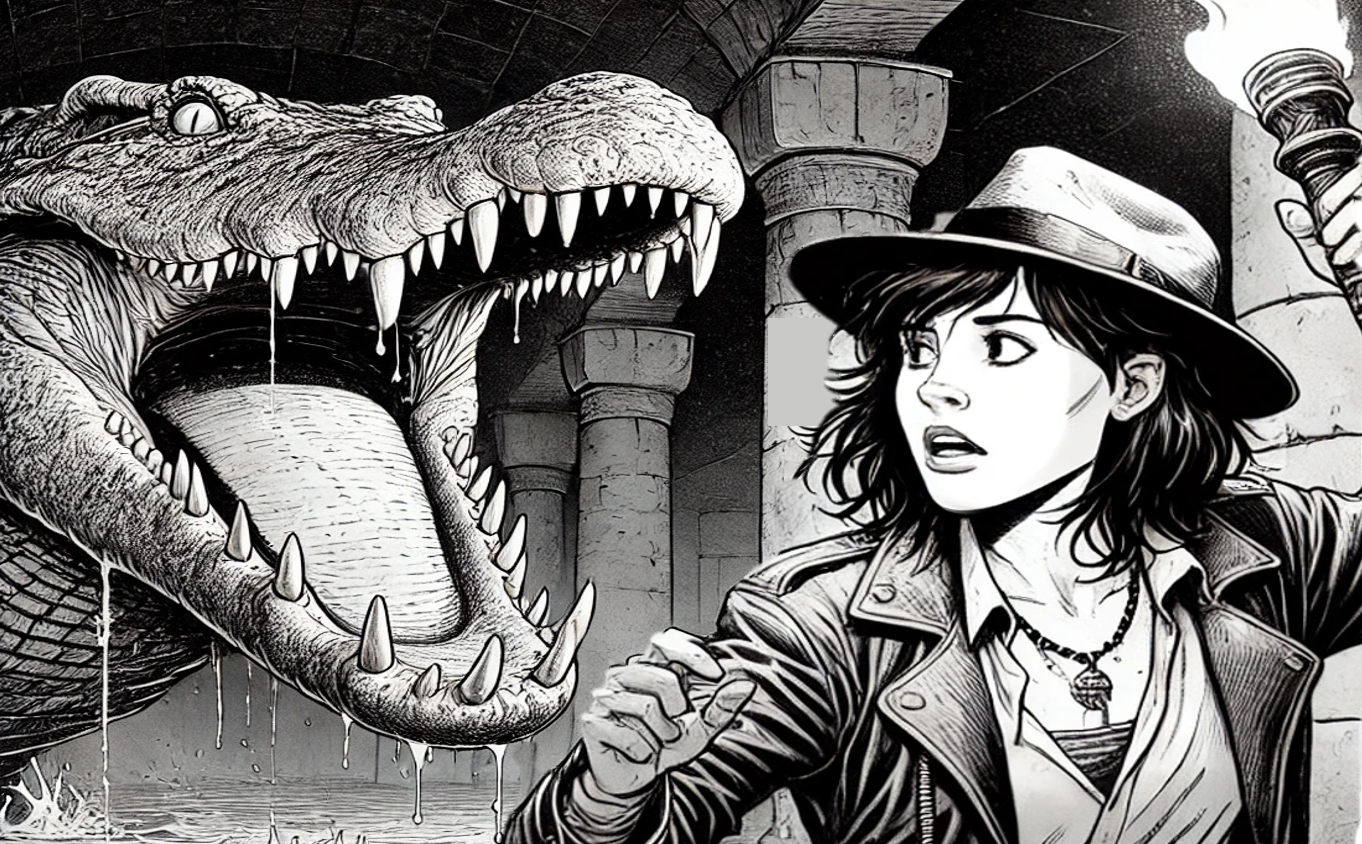
Crocodiles—and Sobek in particular—were an obvious inspiration for The Lost Temple of the Crocodile Queen.
The novel's hidden temples, ancient rituals, and supernatural dangers are fiction. But the culture that inspired them was very real. Egyptians really did worship a crocodile-headed god. Priests really did tend sacred crocodiles. And thousands upon thousands of mummified crocodiles really were buried beneath the Egyptian sands.
Which, when you think about it, may be stranger than anything I could have invented.
~ E.M. Quest
Featured in: The Lost Temple of the Crocodile Queen
You might also enjoy reading about: