The Saadian Tombs: History Beneath Marrakesh
Curse of the Black Talon is a work of fiction—but the Saadian Tombs, the rich history of Marrakesh, and many of the locations Riley explores are rooted in real history. Beneath the bustling streets of Morocco's Red City lies one of the most remarkable royal necropolises in North Africa. Here's where the facts end and the fiction begins.
An Historical Overview
For more than two centuries, one of Morocco’s greatest royal burial complexes lay hidden in plain sight.
Today, the Saadian Tombs are among Marrakesh’s most celebrated historical monuments, visited by travelers from around the world. Yet for generations they were forgotten, sealed away behind walls and accessible only through a narrow passage known to a handful of locals. By the time European scholars rediscovered them in the early twentieth century, they had already become the stuff of legend.
It is perhaps fitting that a mystery set in Marrakesh should eventually lead to the Saadian Tombs, for their own history reads very much like an adventure story.
The Saadian Dynasty
The tombs were constructed during the reign of SultanAhmad al-Mansur (1549–1603), the most famous ruler of Morocco’s Saadian Dynasty. The Saadians rose to power in the sixteenth century after helping drive Portuguese influence from much of the country. Under al-Mansur, Morocco enjoyed a period of wealth, military success, and cultural achievement.
Determined to create a burial place worthy of his dynasty, al-Mansur commissioned an elaborate necropolis just south of the Kasbah Mosque in Marrakesh. Built with imported Italian marble, cedar wood, intricate stucco carvings, and brilliantly colored zellij tilework, the complex became one of the finest examples of Moroccan architecture.
The most celebrated chamber, known today as the Hall of Twelve Columns, housed the tomb of al-Mansur himself beneath a magnificent cedar ceiling supported by gleaming marble pillars. Around him rested members of his family, trusted advisers, and later generations of Saadian royalty.
For a time, the tombs stood as a symbol of dynastic power and prestige.
Then history intervened…
A Dynasty Erased
In 1659, the Saadian Dynasty collapsed. A new ruling family, the Alaouites, eventually seized power and established the line that still reigns in Morocco today.
One of the most formidable Alaouite rulers was Sultan Moulay Ismail (1645–1727). Known for his ambitious building projects and iron-fisted rule, he sought to eliminate reminders of rival dynasties. Rather than destroy the Saadian Tombs outright, he ordered much of the complex sealed behind walls and surrounding structures.
The royal dead remained undisturbed, but they were effectively hidden from public view.
For nearly two hundred years, the tombs vanished from historical memory. Travelers described rumors of forgotten royal graves somewhere within the Kasbah district, but few knew their precise location. The elaborate mausoleums sat silently behind walls while Marrakesh continued to grow around them.
Rediscovery from the Sky
The modern rediscovery of the tombs came through a surprisingly modern technology: aerial photography.
For generations, travelers, historians, and local residents knew that members of the Saadian Dynasty had once been buried somewhere within the Kasbah district of Marrakesh. Yet the precise location of their royal mausoleums remained uncertain. The tombs had been sealed behind walls and hidden by later construction so effectively that they disappeared from public life.
Then, in 1917, during the French Protectorate, military aviators photographing Marrakesh from above noticed something unusual. Beyond the walls near the Kasbah Mosque lay a series of enclosed structures and courtyards that did not appear on contemporary maps. What had once been invisible from the street became obvious from the sky.
Investigators soon identified the site as the long-lost burial complex of the Saadian sultans.
The discovery caused considerable excitement among historians and archaeologists. Behind the walls they found not only the tombs of Saadian rulers, but some of the finest surviving examples of sixteenth-century Moroccan craftsmanship. Cedar ceilings, intricate stucco carvings, geometric zellij tilework, and imported marble had remained remarkably well preserved despite centuries of isolation.
To modern readers, aerial archaeology may seem commonplace. Satellites, drones, and aircraft are now standard tools of exploration. But in 1917 the idea that an ancient monument could be rediscovered from the air felt almost miraculous. The airplane itself was barely a decade old, and archaeologists were only beginning to realize how useful aerial photography could be in locating lost sites.
The Saadian Tombs in Riley's Day
When Riley Chase arrives in Marrakesh in 1935, the rediscovery of the tombs would still be recent memory. Less than twenty years had passed since their return to public knowledge. Restoration work continued, scholars debated their history, and visitors could walk through chambers that had been hidden from the world for more than two centuries.
For an archaeologist—or a young adventurer—the allure would have been impossible to resist. A forgotten royal necropolis, lost for generations and found again through one of the newest inventions of the modern age, was precisely the sort of story that blurred the line between history and legend.
Legacy
Today, the Saadian Tombs remain one of Morocco’s most treasured historical sites. They serve not only as a monument to a powerful dynasty, but also as a reminder that history is often hidden just beneath the surface.
In many ways, their story mirrors the themes at the heart of adventure fiction itself. Forgotten places are rediscovered. Lost histories are brought back into the light. Secrets endure long after those who created them have vanished.
The real Saadian Tombs may not conceal cursed relics, ancient conspiracies, or sinister villains. Yet their true history is remarkable enough. Hidden for centuries, rediscovered from the air, and preserved through generations of change, they stand as one of Marrakesh’s most enduring links to the past—and a fitting backdrop for any mystery.
~E.M. Quest
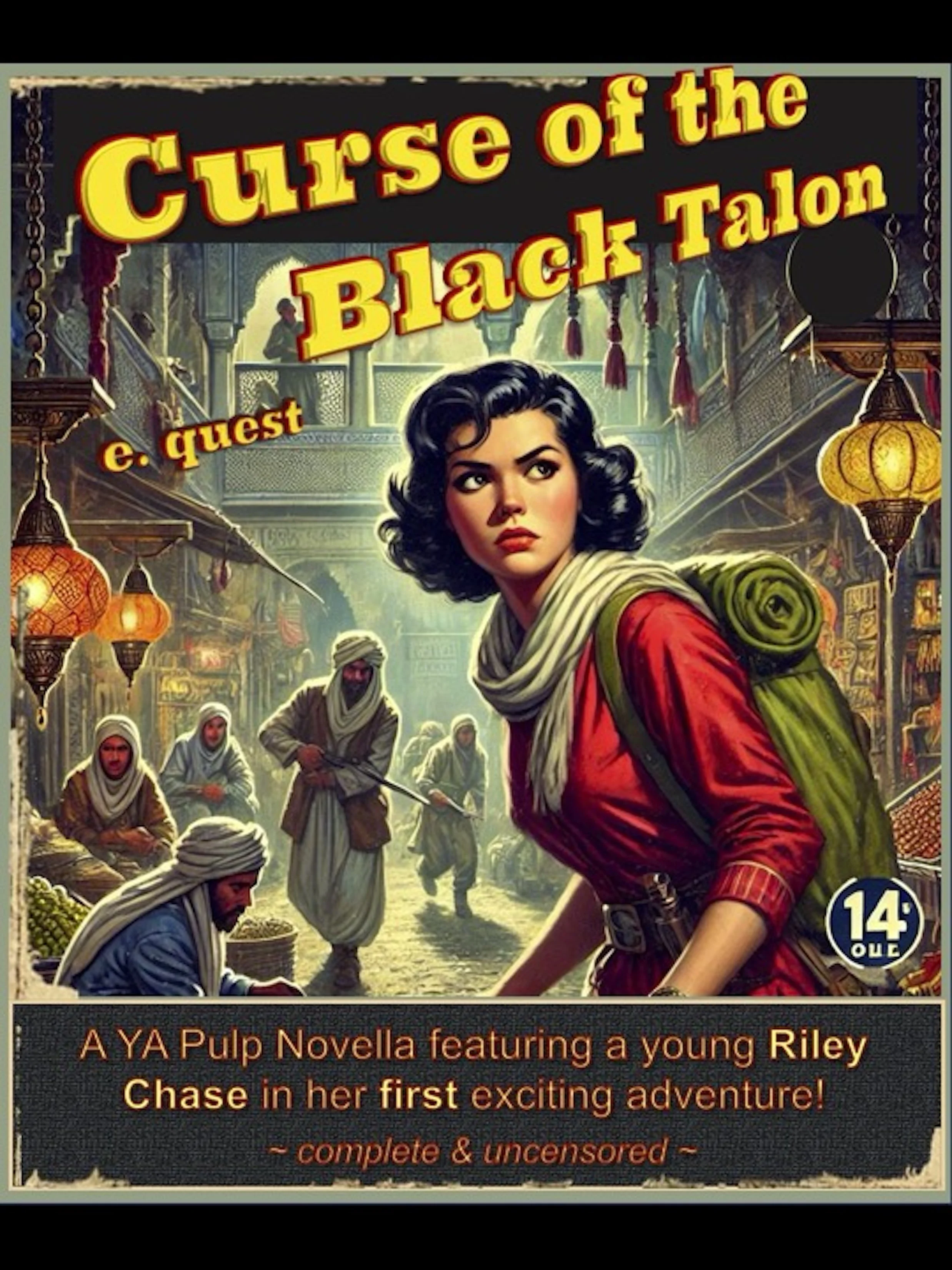
Featured in: Curse of the Black Talon
You might also enjoy reading about: